LNG Cargo Containment Systems: The Engineering Choices Behind the Hull

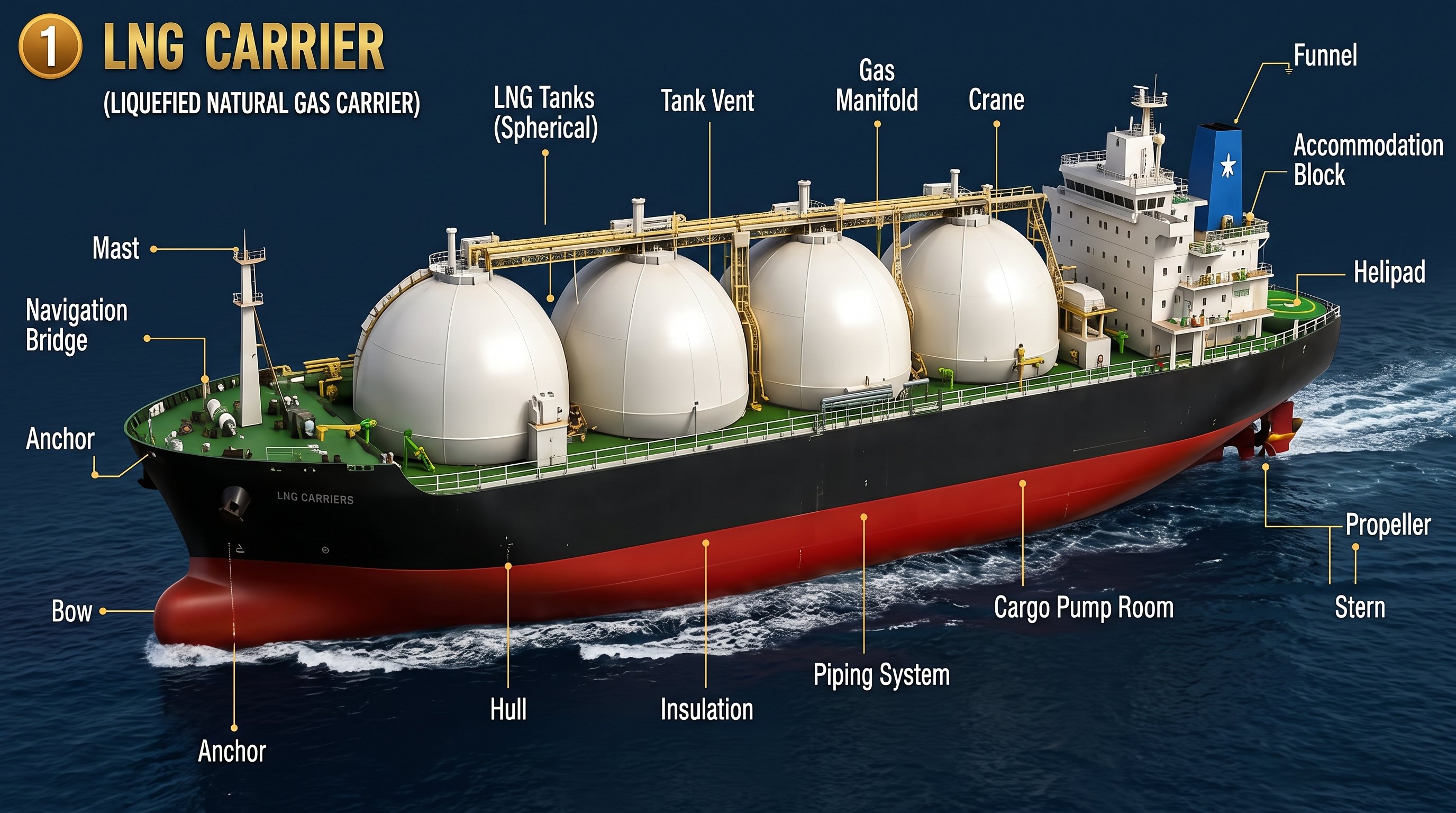
One key aspect of LNG carrier design is the cargo containment system and while it’s often framed as Moss vs membrane, the engineering scope is broader.
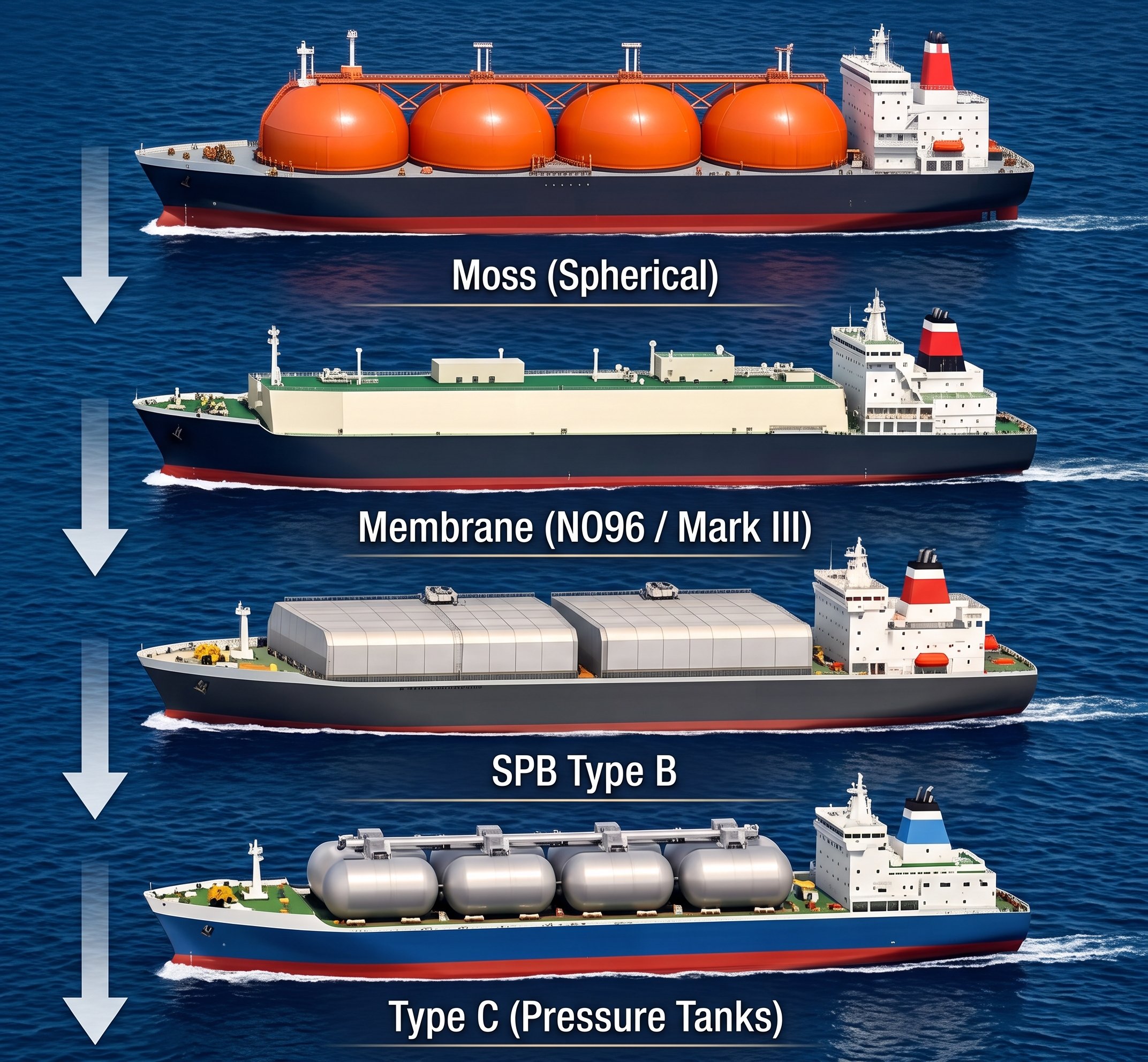
| System | Description | Advantages | Limitations |
|---|---|---|---|
| Moss (Spherical) Systems | Self-supporting aluminium tanks, structurally independent of the hull. |
|
|
| Membrane Systems (NO96 / Mark III) | Thin metallic membranes supported by insulation and the ship’s hull. |
|
|
| SPB (Type B Prismatic) | Independent prismatic tanks using fracture-mechanics design. |
|
|
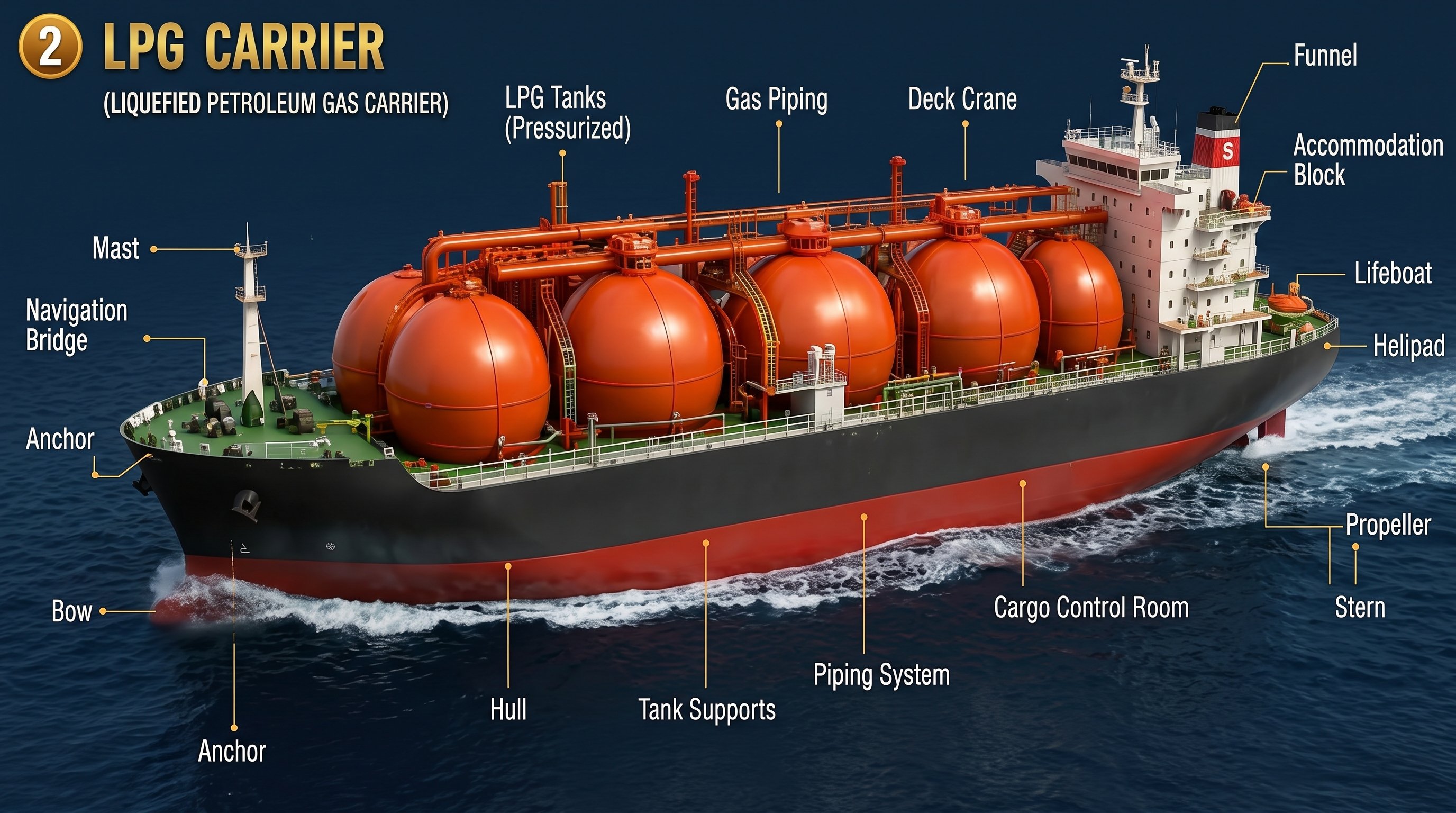
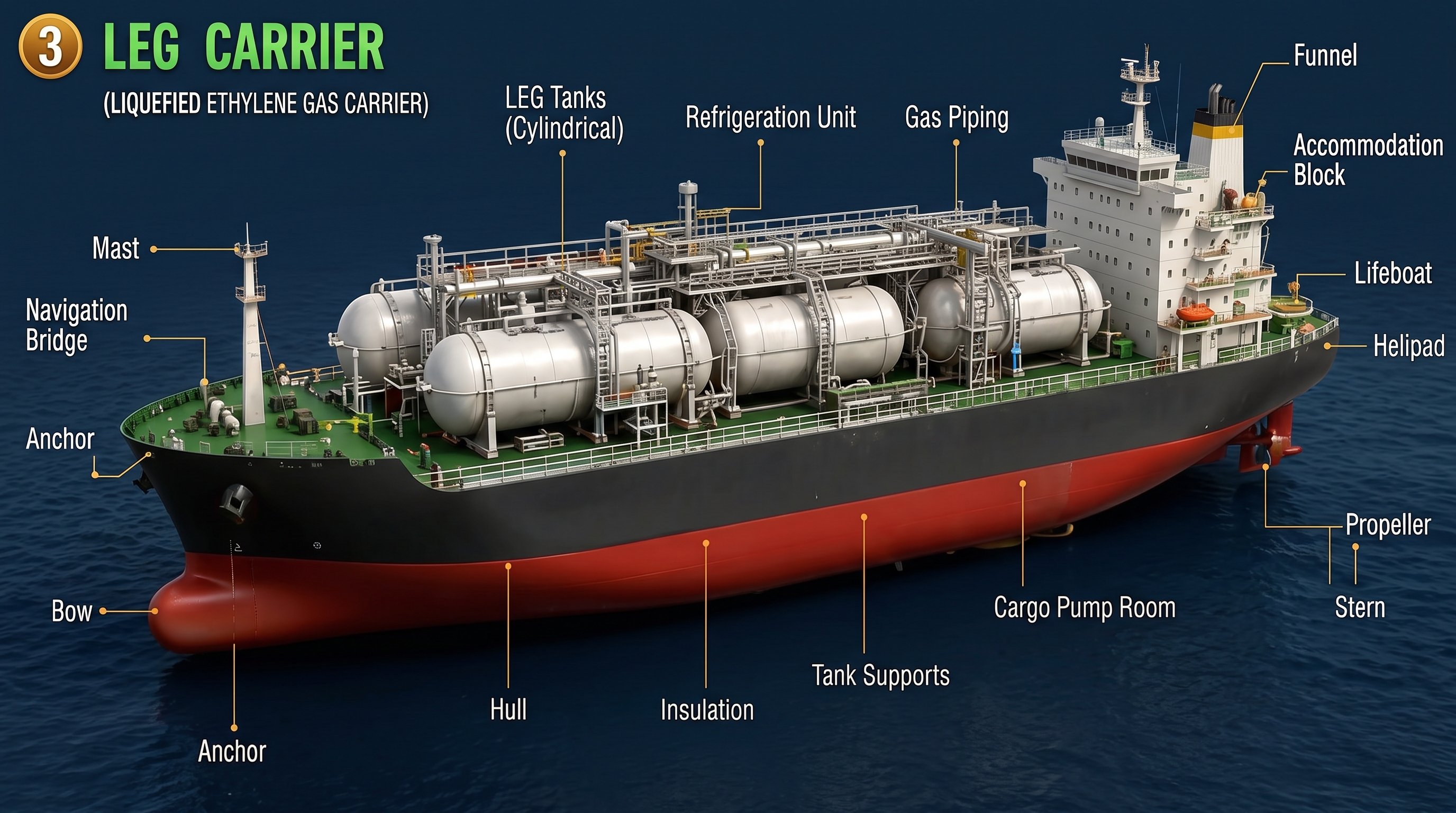
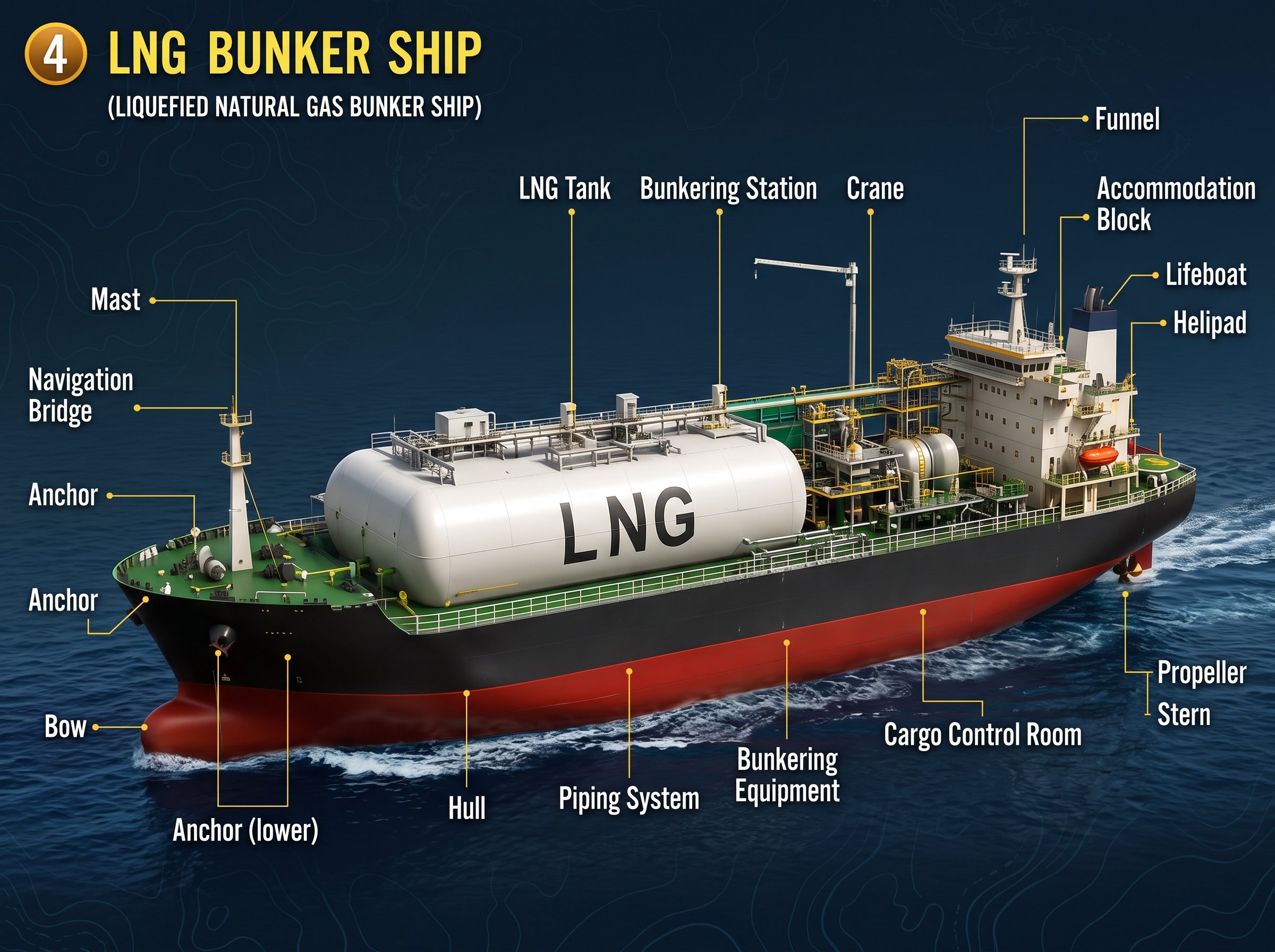
| Type C (Pressure Tanks) | Pressure-rated cylindrical or bi-lobe tanks. |
|
|
Types of the Ships